
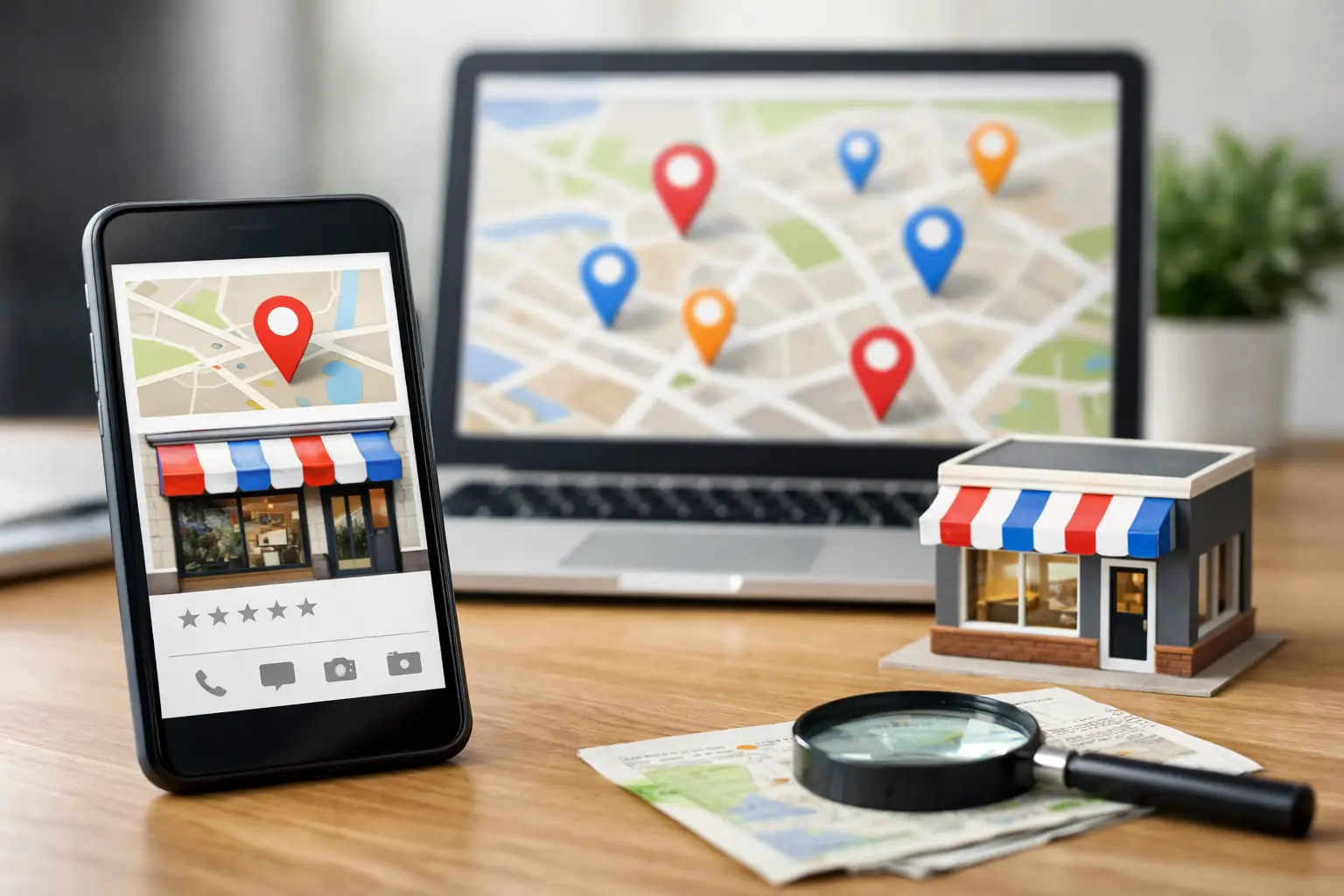
A customer searches for “plumber near me”, “best café in Leeds” or “solicitor in [their town]”. Before they reach most business websites, they see the local map results. Your Google Business Profile is what puts your business in that decision-making moment. This Google Business Profile guide explains how to set it up properly, keep it useful and turn local visibility into genuine enquiries.
For many small businesses, this is one of the highest-value pieces of online marketing available. It is free to create, but it is not set-and-forget. An incomplete or neglected profile can make an otherwise excellent business look hard to contact, unreliable or simply less relevant than the competition.
What a Google Business Profile actually does
Your Google Business Profile is the listing that can appear in Google Search and Google Maps when people look for your business or for services like yours nearby. It brings together the practical information a potential customer needs: your phone number, website, address or service area, opening hours, reviews, photos and updates.
More than a digital directory entry, it is a local trust signal. A profile with accurate details, recent photos and thoughtful review responses tells people that there are real people behind the business. A profile with old opening hours, no images and unanswered one-star reviews creates the opposite impression.
It will not replace a well-built website or a wider SEO strategy. Google still needs clear website content, a technically sound site and evidence that your business is relevant. But for local searches with strong buying intent, your profile can be the shortest route between a search and a phone call.
Google Business Profile guide: set the foundations first
Start by claiming your profile or creating one if no listing exists. Use the exact trading name customers know you by. Do not add keywords, locations or slogans to the business name unless they are genuinely part of your registered public-facing name. “Smith & Sons Roofing” is fine. “Smith & Sons Roofing – Best Emergency Roofers Manchester” is not.
Google may ask you to verify ownership by video, phone, email or post. Complete this promptly. Until verification is finished, you have limited control over how the business appears.
Choose the right category
Your primary category has a real effect on which searches you may appear for, so choose the closest description of your main service. A wedding photographer should not select a vague category because it sounds broader. A restaurant should select the type of restaurant it is, not simply a general food category if a more accurate option exists.
You can add relevant secondary categories, but do not try to cover every service you offer. Categories should describe the business, not act as a dumping ground for search terms. If you are unsure, look at established local competitors, then choose the option that is both accurate and specific.
Get location and contact details right
If customers visit your premises, enter the full address exactly as it is used elsewhere online. Make sure the map pin sits in the right place, particularly on business parks, rural sites and new developments where mapping can be unreliable.
If you travel to customers, such as an electrician, cleaner or mobile beauty therapist, use a service-area setup instead of showing a home address. Define sensible service areas based on where you can genuinely work profitably. Claiming the whole of the UK when you cover a 20-mile radius does not help customers and can confuse Google.
Add a local phone number where possible, your main website address and normal opening hours. Include special holiday hours too. Nothing loses goodwill faster than a customer travelling to a supposedly open business only to find the shutters down.
Make the profile useful before making it clever
The best profiles answer the questions customers ask before they contact you. Complete every appropriate field, including services, accessibility details, appointment options, payment methods and attributes. These small details reduce uncertainty, especially for people comparing several businesses quickly.
Write your business description in plain English. Explain what you do, who you help, where you work and what makes your service a sensible choice. This is not the place for exaggerated claims or a paragraph packed with repeated keywords.
For example, a local accountant might say they support sole traders and growing limited companies across Bristol with bookkeeping, accounts, tax returns and practical advice. That tells the reader enough to decide whether to get in touch. “Award-winning, leading, trusted, best-in-class accounting solutions” tells them very little.
Add services people recognise
List your core services using names customers would actually search for. A web design business might include brochure websites, ecommerce websites, website maintenance and SEO services. A dental practice might list check-ups, hygienist appointments, teeth whitening and emergency appointments.
You can add a short description and, where appropriate, prices. Pricing is a judgement call. If every job is bespoke, a fixed price may mislead people. A starting price or a clear explanation of what affects cost can still filter out unsuitable enquiries and set expectations early.
Use photos that prove your business is real
Photos matter because they make a profile feel current and credible. Use a clear logo and cover image, then add genuine photographs of your premises, team, completed work, products or service in action. For trades, before-and-after project photos can work well. For hospitality, show the space, food and atmosphere honestly.
Avoid generic stock photography where you can. People are trying to establish whether you are a real local business, not judge the quality of a stock image library. Add new images periodically, particularly when you complete standout work, refresh your premises or introduce a new service.
Reviews are a sales conversation in public
A steady flow of genuine reviews can influence both customer confidence and local visibility. The goal is not to chase a perfect five-star score. The goal is to make asking for feedback part of your normal customer process.
Ask shortly after a successful job, purchase or appointment, when the experience is fresh. Make the request simple and personal. A short follow-up message that thanks the customer and asks for an honest Google review is usually enough. Do not offer discounts or rewards in exchange for reviews, and do not ask friends or staff to write reviews about work they have not received.
Reply to reviews consistently. Thank positive reviewers without copying the same response every time. For negative feedback, stay calm, acknowledge the issue and offer to resolve it privately where appropriate. Do not argue, reveal personal details or write a defensive essay. Future customers will often judge your response more than the complaint itself.
Keep your profile active without creating more admin
Google gives businesses options to publish updates, offers and events. These can be useful when there is something worthwhile to say: a seasonal service, revised Christmas opening times, a new product range, an open day or a limited-time offer.
Do not post for the sake of appearing busy. One useful update a month is better than frequent posts that say nothing. The same applies to the questions-and-answers section. Add answers to common questions if the feature is available on your profile, and keep an eye on questions submitted by the public. An unanswered question about parking, availability or pricing can cost an easy enquiry.
For service businesses, regular activity can be simple: share a completed project, explain a common customer problem or highlight an area you have recently served. Keep the message specific, useful and tied to a clear next step such as calling, booking or visiting the website.
Measure actions, not just views
A profile can receive plenty of views without producing worthwhile business. Check the performance section regularly to see how people found you and what they did next. Focus on calls, website visits, direction requests and bookings rather than treating impressions as the finish line.
Look for patterns. If calls rise after you add clearer services and recent work photos, that is useful evidence. If people request directions but rarely contact you, review whether your opening hours, location information or on-site experience are creating friction.
You can also use a separate tracking number or tagged website address, but only if it is set up carefully and does not leave customers facing a dead end. For most smaller businesses, clear reporting and a reliable main phone number are more valuable than complicated tracking.
Common mistakes that hold local businesses back
The biggest problem is inconsistency. Your business name, phone number, address and website should match across your website, social profiles and major directories. Small variations are not always disastrous, but conflicting information makes it harder for search engines and customers to know what is correct.
Other avoidable mistakes include selecting irrelevant categories, publishing keyword-heavy business names, neglecting reviews, leaving old hours in place and creating duplicate listings. If you find duplicate profiles, do not ignore them. They can split reviews and confuse search results. Claim the correct listing and work towards having the duplicate removed or merged.
It also depends on the type of business. A high-street shop needs accurate directions, photos and opening hours. A trades business needs clear service areas, proof of work and fast contact options. A professional service may benefit most from detailed services, strong reviews and a website that explains the next step. The profile should reflect how customers actually choose you.
Treat your Google Business Profile like a working part of your sales process, not a box ticked years ago. Give it accurate information, fresh evidence and timely replies, and it can make the first interaction with your business feel straightforward and reassuring. That is often all a local customer needs to choose you over the business next to you on the map.