
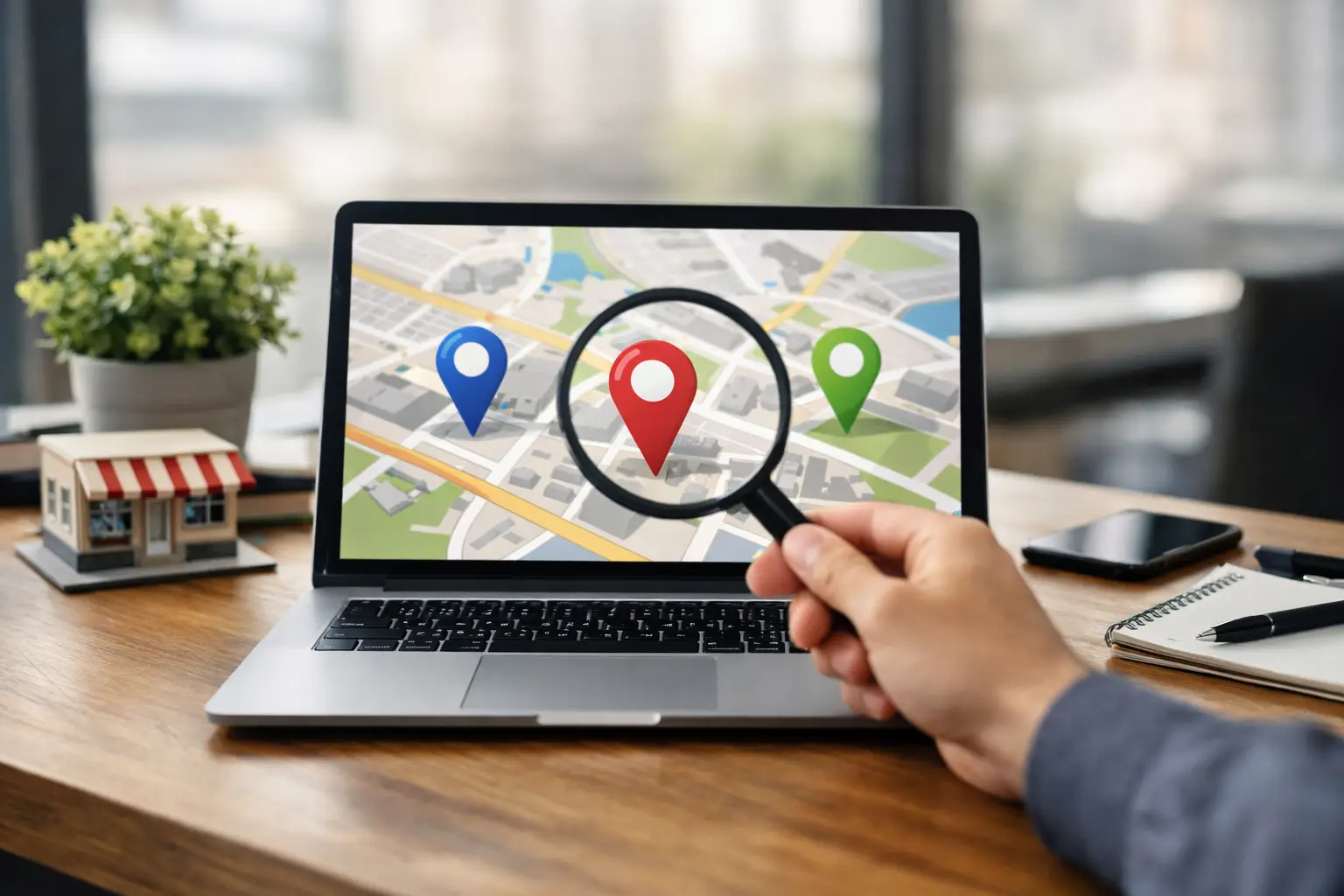
A local customer searching for a roofer, accountant or café is rarely looking for a marketing masterclass. They want a trustworthy business nearby, clear details, proof that other people have had a good experience, and an easy way to get in touch. A good local SEO strategy guide should focus on exactly that: helping the right people find and choose your business when they are ready to act.
Local SEO is not about stuffing town names into every page or chasing a number-one position for vanity. It is about creating consistent signals that show Google, and your prospective customers, where you work, what you do and why you are a credible choice. Done properly, it supports a healthier flow of calls, direction requests, bookings and enquiries.
A local SEO strategy guide built around buyers
Local search results look different from ordinary organic results. For many searches, Google shows a map, a group of nearby businesses and key details such as reviews, opening hours and phone numbers before it shows standard website listings. That means your website matters, but it is only one part of the picture.
Your local SEO strategy needs to join up three things: a complete and accurate Google Business Profile, a website that clearly serves local customers, and real-world evidence that your business is active and trusted. If one of these is missing, the whole approach becomes harder.
A business with excellent reviews but an out-of-date profile can lose calls. A polished website without location relevance may struggle to appear for nearby searches. And a profile packed with information cannot fully compensate for a slow website that gives visitors no confidence to enquire. The goal is consistency, not clever tricks.
Start with your Google Business Profile
For many small businesses, the Google Business Profile is the most immediate local SEO opportunity. It feeds the information potential customers see in Maps and local search results, so treat it as a working sales asset rather than a box to tick once and forget.
Claim and verify the profile if you have not already. Then make sure your business name, primary phone number, website address, opening hours and business category are correct. Use the name you trade under in the real world. Adding extra keywords to the business name may look tempting, but it can create problems and does not build lasting visibility.
Choose a primary category that describes your main service as precisely as possible. A kitchen fitter, for example, should not rely on a broad category if a more relevant one is available. Add sensible secondary categories only where they reflect genuine services. Trying to cover every possible category muddies the message for customers and search engines alike.
Make the profile useful, not just complete
Write a clear business description in plain English. Explain what you offer, the areas you serve and the type of customer you help. Add recent photos of your work, team, premises or vehicles where relevant. Original images are far more persuasive than generic stock photography, especially for service businesses where customers want reassurance that a real local team will turn up.
Keep your opening hours accurate, including bank holidays and seasonal changes. If you take appointments, offer emergency call-outs or work at customer locations rather than from a public office, reflect that accurately. Incorrect practical information creates frustration, wasted leads and poor reviews.
Build a website that proves local relevance
Your website should give a visitor enough confidence to make contact without forcing them to hunt for basics. Put your phone number, service area and primary call to action where people can easily see them. If you want enquiries, make the next step obvious: call, request a quote, book a consultation or visit the premises.
Create a strong page for each core service. A page for boiler repairs should explain the work, who it is for, common problems, what the customer can expect and how to enquire. Where it makes sense, include local context naturally, such as the towns or districts you regularly serve. This is more valuable than repeating the same location phrase in every sentence.
Avoid thin location pages
Location pages can work well when they offer something specific. A builder who has completed projects in Bristol, Bath and Keynsham may have useful local examples, testimonials, service details and travel information for each area. That gives customers a genuine reason to read the page.
They do not work well when they are copied templates with only the town name swapped out. Dozens of near-identical pages can weaken trust and waste time that would be better spent improving key service pages. If you serve a wide area, a well-written service area page can be more effective than creating a page for every postcode.
Make sure your name, address and phone number are consistent wherever they appear on the site. If you have a physical location customers can visit, include the full address. If you are a service-area business operating from home, be careful not to publish an address you do not want customers visiting.
Get the technical basics right
No-nonsense local SEO still needs a website that works properly. Google and customers both have little patience for a site that is slow, confusing or difficult to use on a phone. Most local searches happen on mobile, often when someone needs an answer quickly.
Check that each important page has a clear page title and a descriptive heading. Keep navigation simple. Make contact forms short enough that people will actually complete them, and test them regularly. There is no value in earning local traffic if quote requests disappear into an inbox nobody checks.
Your site should also use secure browsing, load reliably and avoid intrusive pop-ups that block the content on a mobile screen. Technical perfection is not the target. A fast, clear, dependable website is. If your current site looks good but does not generate enquiries, the problem is often clarity and user journey rather than design alone.
Earn reviews and local trust signals
Reviews influence decisions before a visitor reaches your website. They also give Google useful context about the quality and relevance of your business. The best approach is simple: ask satisfied customers at the right moment, make the process easy and respond professionally.
Build review requests into your normal customer journey. For a tradesperson, that may be shortly after a successful job. For a clinic, it may be after the customer has had time to see the benefit of their appointment. Do not pressure people, offer incentives for positive reviews or ask staff and friends to create artificial feedback. It is not worth the risk to your reputation.
Reply to reviews, including the occasional negative one. A calm, helpful response can demonstrate more about your standards than a string of five-star ratings. If there is a genuine issue, acknowledge it and move the conversation offline where appropriate. Do not argue in public.
Local mentions also help build confidence. Accurate listings on relevant local directories, trade bodies, community organisations and supplier websites can reinforce your business details. Quality matters more than quantity. A credible local mention is useful; a pile of low-quality directory submissions is not a strategy.
Create content that answers local questions
Content marketing can support local SEO, but it should earn its place. A monthly article that says very little will not move the needle. Useful content answers questions customers ask before they enquire.
An estate agent might explain what sellers should prepare before a valuation in their area. A solicitor could clarify the stages of buying a home. A landscaper might show how local soil conditions affect planting choices. These topics demonstrate experience, create useful website pages and give customers a reason to trust you before the first conversation.
Case studies are particularly valuable for local businesses. Show the problem, the work completed and the result, with permission from the customer. Include photographs where possible. This is stronger than broad claims such as best service or leading provider because it gives people evidence they can judge for themselves.
Measure enquiries, not just rankings
Rankings can be useful for spotting trends, but they are not the business outcome. A lower ranking for a broad phrase may still produce more enquiries than a high ranking for a search nobody uses. Track the actions that matter: calls, form submissions, booking requests, direction requests and qualified leads.
Review your Google Business Profile insights alongside website data each month. Look for patterns. Are calls increasing after you add new reviews? Are visitors leaving a key service page without enquiring? Is one area producing plenty of traffic but few worthwhile jobs? These answers help you spend time where it has a commercial return.
It also depends on your business model. A restaurant may care most about direction requests and booking clicks. A B2B consultancy may need fewer but higher-value form enquiries. A local SEO plan should reflect the way you actually win work, not a generic reporting template.
Give the work enough time to compound
Local SEO can deliver quick improvements when your profile is incomplete or your website has obvious gaps. But sustainable results come from regular attention: updating details, requesting genuine reviews, publishing evidence of good work and improving pages based on customer behaviour.
Start with the essentials, then build from there. Get the profile right, make your core service pages useful, remove friction from contacting you and create a simple process for gathering honest feedback. That is not flashy, but it is the kind of work that makes your business easier to find and easier to choose.
The most useful question is not whether you can appear for every local search. It is whether a nearby person with a genuine need can quickly understand why they should contact you. Keep improving the answer to that question, and your local visibility has something solid to grow on.