
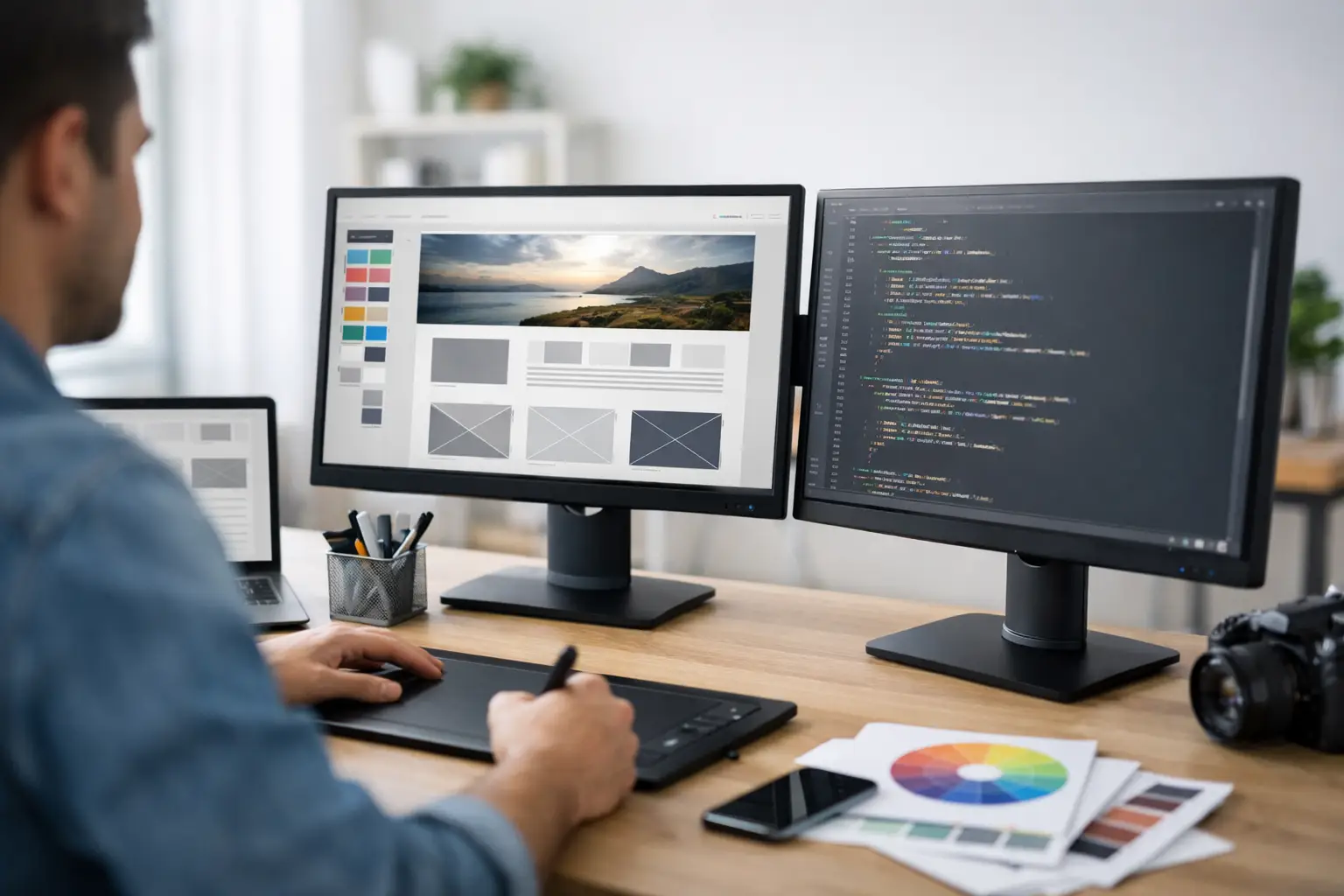
A lot of business owners ask the same question after getting a few website quotes and hearing a mix of technical terms: what is web design development, exactly? Fair question. It sounds like one thing, but it actually covers two closely connected parts of building a website – how it looks, and how it works.
If you are running a business, this matters because a good website is not just there to look presentable. It needs to load properly, guide people clearly, build trust, and turn visits into enquiries or sales. When either the design or the development is weak, the whole site suffers.
What is web design development in simple terms?
Web design development is the combined process of planning, designing, building and launching a website. Design focuses on the visual side and the user experience. Development turns that design into a functioning site that people can actually use on phones, tablets and desktops.
Think of it this way. Web design decides what visitors see and how they move through the site. Web development makes sure the buttons work, the pages load, the forms send properly, and the content behaves as it should.
These two parts are different, but they should never be treated as completely separate. A beautiful website that is slow, broken or confusing will not perform. Equally, a technically solid website with poor layout and unclear messaging will struggle to convert.
The difference between web design and web development
This is where a lot of confusion starts, especially for businesses trying to compare agencies or freelancers.
Web design
Web design is about presentation and usability. It covers the layout of pages, colours, typography, spacing, images, calls to action, and the overall feel of the site. It also includes user journey thinking – where people land, what they need to see first, and what should happen next.
Good design is not decoration. It helps visitors understand who you are, what you offer and why they should trust you. For a small business, that might mean a clear homepage, strong service pages, obvious contact options and a mobile-friendly layout that does not frustrate people.
Web development
Web development is the build side. It is the technical work that turns a design into a live website. That includes coding, setting up templates, integrating forms, managing content systems, improving performance, and making sure everything functions correctly across devices and browsers.
Development can also cover more advanced work, such as custom features, booking systems, e-commerce functionality, CRM integrations or API connections. Not every business needs that level of complexity, which is why the right solution depends on your goals rather than a one-size-fits-all package.
Why businesses should care about both
Plenty of websites fail for a simple reason: they are built around appearance alone, or around technology alone, instead of business outcomes.
A smart website needs to do three jobs at once. It should represent your brand properly, make life easy for your visitors, and support your marketing. If it looks dated, people may question your credibility. If it is hard to use, they leave. If it is not built with performance and search visibility in mind, fewer people find it in the first place.
That is why web design development should be treated as a joined-up process. The design choices affect user behaviour. The development choices affect speed, usability and scalability. Both influence conversion rates.
What web design development usually includes
The exact scope varies, but most projects include several core stages.
Strategy and planning
Before any design starts, there should be a clear understanding of the business, the audience and the website goals. A brochure site for a local trades business will not be planned the same way as a lead generation site for a legal firm or an online shop with dozens of product categories.
This stage often covers sitemap planning, page priorities, calls to action, messaging structure and content requirements. It is less exciting than picking colours, but it saves time and avoids expensive rework later.
Design and user experience
Once the structure is agreed, the design phase shapes how the website will look and feel. This is where branding, layout and user experience come together. A strong design gives people confidence quickly. It helps them find what they need without having to think too hard.
For example, if your main goal is generating enquiries, the contact routes should be obvious throughout the site. If your goal is bookings or sales, the path to conversion should be short and clear.
Development and build
This is where the approved designs are turned into a live website. Depending on the project, that might involve building on a content management system such as WordPress, creating custom page templates, optimising mobile responsiveness, and setting up core functionality.
A good build is not just about getting the site online. It should be secure, easy to update, reasonably fast, and built in a way that supports future growth. Cutting corners here often creates problems later.
Testing and launch
Before launch, the site should be checked properly. That includes mobile responsiveness, browser compatibility, form testing, speed, broken links, basic SEO setup and content accuracy. This stage is often rushed, and that is where avoidable issues creep in.
A smooth launch is useful, but what matters more is launching a site that actually works.
What good web design development looks like
For a business owner, the quality of a website is not measured by how clever the code is or how trendy the visuals are. It is measured by whether the site helps the business.
A well-designed, well-developed website should be easy to navigate, quick to understand and simple to use. It should load well on mobile, because that is where a large share of traffic now comes from. It should have clear messaging, consistent branding and obvious next steps.
It should also support your wider marketing. If you are investing in SEO, paid ads or social media, your website needs to be ready for that traffic. Sending people to a slow, confusing or outdated site wastes budget.
Common mistakes businesses make
One of the biggest mistakes is treating a website as a one-off design project rather than a business tool. A site is not finished just because it is live. It still needs updates, content improvements, technical maintenance and performance tracking.
Another mistake is choosing based on the cheapest quote without understanding what is included. Lower prices can sometimes mean basic templates, poor planning, limited revisions, weak SEO foundations or no aftercare. Cheap websites are not always bad, but cheap for the sake of cheap often becomes expensive later.
There is also a tendency to overload websites with too much information. Business owners know their service inside out, so they naturally want to say everything. The problem is that visitors usually need clarity first, not a wall of text. Good design development balances detail with usability.
Does every business need a custom website?
Not necessarily. This is where honesty matters.
Some businesses genuinely need custom design and development, especially if they have specific functionality requirements, a competitive market, or a strong need to stand out. Others are better served by a simpler build that focuses on speed, clarity and lead generation rather than bespoke features they may never use.
The right question is not whether custom is better in theory. It is whether it is better for your business, your users and your current stage of growth.
That is the approach businesses often appreciate most from MAWEBDESIGN – no jargon, no padded recommendations, and no selling complexity for the sake of it.
How to tell if your current site needs work
If your website looks dated, performs poorly on mobile, loads slowly, gets traffic but very few enquiries, or feels difficult to update, there is a good chance the design, development or both need attention.
You may also notice softer warning signs. People ask basic questions that should already be answered on the site. Paid ads are getting clicks but not conversions. Your brand has improved, but your website still reflects an older version of the business. These are often signs that the site is no longer doing its job.
So, what is web design development really about?
At its core, it is about building a website that works for the business behind it. The design should make the right impression. The development should make that experience dependable, fast and usable. Neither part matters much in isolation.
For business owners, the goal is not to become an expert in code or design theory. It is to understand enough to make better decisions, ask better questions and avoid paying for the wrong solution. A good website should feel clear from both sides – clear for your visitors and clear for you.
If you are reviewing your own site, keep it simple. Ask whether it looks trustworthy, works properly, and gives people a clear reason to take the next step. If the answer is shaky on any of those, that is usually where the real opportunity starts.