
A lot of business owners ask the same question after a disappointing website, a logo redesign that changed nothing, or marketing that looks polished but does not convert: what is the difference between branding and brand identity? It is a fair question, because the two are constantly mixed together. And when that happens, businesses often spend money on the wrong thing.
If you have ever said, “We need branding,” what you may actually mean could be very different. You might need clearer positioning. You might need a visual refresh. You might need consistency across your website, social media and sales materials. These are not all the same job, and treating them as if they are usually leads to average results.
What is the difference between branding and brand identity?
The simplest way to put it is this: branding is the overall perception people have of your business, while brand identity is the visual and verbal system used to present that business.
Branding is the bigger picture. It includes how people feel about your company, what they expect from you, how they describe you to others, and why they choose you over someone else. It lives in the minds of your audience.
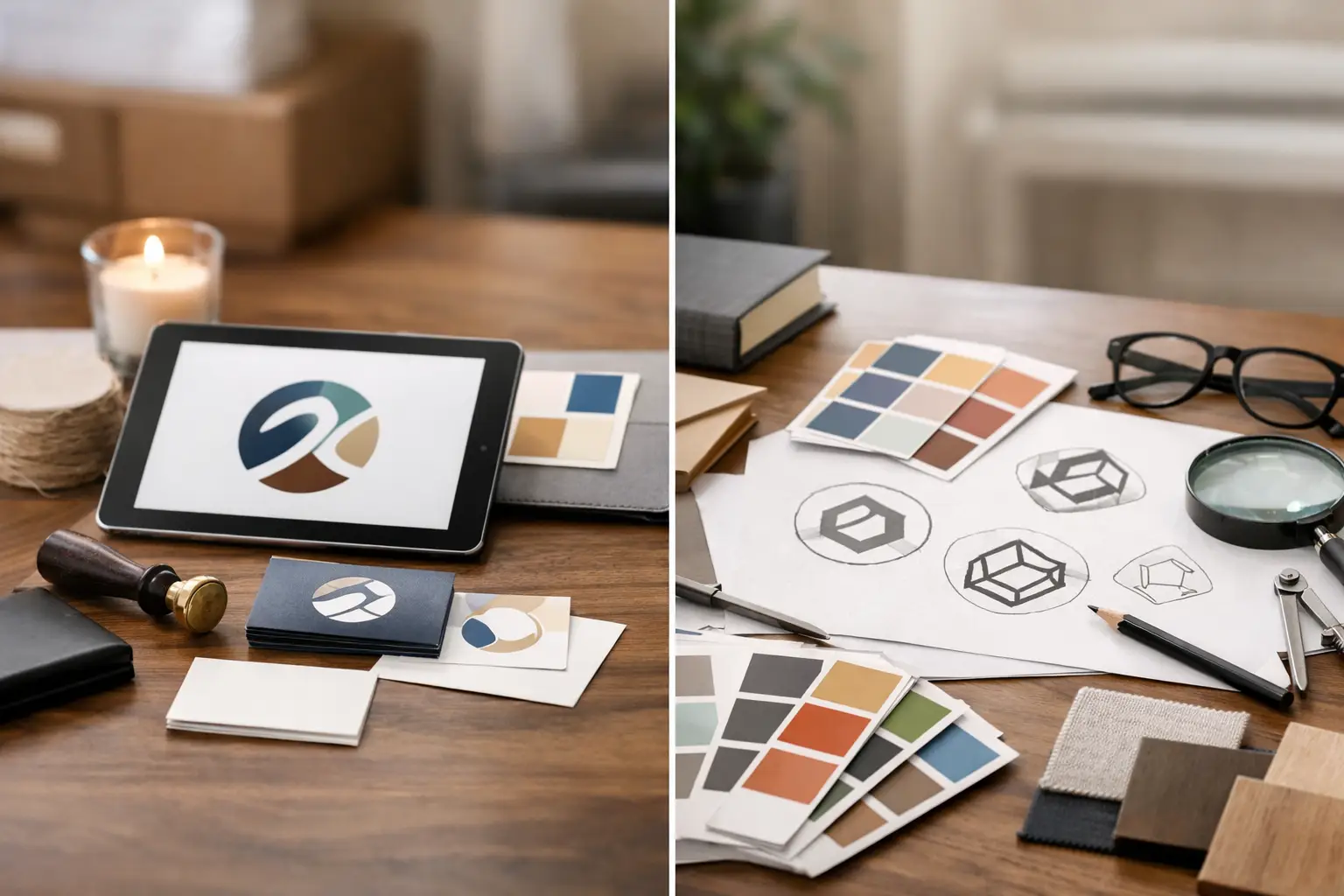
Brand identity is the part you create more directly. It includes your logo, colours, typography, imagery, tone of voice, messaging style and design rules. It is how your business appears and sounds in the market.
So branding is not just your logo, and brand identity is not your entire brand. One shapes perception. The other helps express it.
That distinction matters because you can have a strong-looking identity with weak branding, or strong branding with a poor identity. Ideally, the two support each other.
Branding is the reputation. Brand identity is the presentation.
Think of branding as your business’s reputation in motion. It is built through every interaction someone has with you. Your website speed, the clarity of your offer, the quality of your customer service, your reviews, your adverts, your social content, your follow-up emails – all of it contributes.
If your company promises to be premium but takes days to reply to enquiries, your branding takes a hit. If you position yourself as reliable and then deliver exactly what you said you would, your branding gets stronger. In other words, branding is not something you simply design. It is something you prove.
Brand identity, by contrast, is what gives your brand a recognisable shape. It helps people spot you, remember you and connect your materials back to the same business. A clear identity makes you look consistent and credible. It reduces confusion.
This is why two companies can sell similar services at similar prices, but one feels more established. Often, the difference is not only design quality. It is the relationship between identity and experience. The visuals make a promise. The business then either keeps it or breaks it.
Why people confuse the two
The confusion usually starts because brand identity is the most visible part. It is easy to point to a logo, a colour palette or a typeface and call that “the brand”. It is harder to see the deeper layers, such as market positioning, tone, trust and customer perception.
There is also a practical reason. Many businesses first think about branding when they are launching a new website or need marketing materials. At that point, what they are usually buying is identity work. That may include a logo, visual guidelines, headline style and supporting graphics. Useful, yes. But it is only one part of the full picture.
This is where wasted budget creeps in. A business can pay for a new identity and expect it to fix weak enquiries, low trust or poor conversion rates. Sometimes it helps, but not always. If the core offer is unclear, the messaging is vague or the site experience is clunky, a nicer logo will not rescue it.
What sits under branding?
Branding includes the strategy behind how your business is positioned and remembered. That means understanding who you serve, what makes you different, what value you offer, and how you want to be perceived.
For a small or mid-sized business, branding often shows up in practical questions. Are you the affordable local option, or the specialist premium choice? Do you sound friendly and straightforward, or more formal and technical? Are you known for speed, quality, service or expertise? If you cannot answer those clearly, branding work usually needs attention before visuals do.
Good branding also creates consistency in decision-making. It helps you know what your website should say, what your adverts should focus on, and what kind of content fits your business. Without that foundation, marketing becomes reactive. You post random updates, test scattered ideas and hope something sticks.
What sits under brand identity?
Brand identity takes that strategic direction and turns it into recognisable assets. It is the logo, but it is also much more than that. A proper identity system includes colours, fonts, image style, iconography, layout approach, tone of voice and often rules for how those things are used.
The point is not to make things look fancy. The point is to make them coherent. When someone visits your website, sees your social posts and receives your proposal, it should all feel like the same business. That consistency builds trust.
A strong brand identity also makes life easier internally. It speeds up content creation, keeps marketing materials on track and stops every new design task from starting from scratch. For growing businesses, that matters more than people realise.
Can you have one without the other?
Technically yes, but it is rarely ideal.
A business can have decent branding with a weak identity. This often happens with companies that are known through word of mouth. They may deliver excellent service, have loyal customers and a strong reputation, but their visuals look dated or inconsistent. People trust them anyway, but the identity is not helping as much as it could.
The opposite is common too. A company can have a slick visual identity and still struggle because the branding underneath is thin. The website looks modern, the logo is polished, the social media graphics are tidy – but the message is generic, the offer is unclear and the experience does not stand out. It looks the part without giving people a real reason to choose them.
This is why branding and brand identity should work together. Identity gets attention and recognition. Branding earns trust and preference.
Which should a business work on first?
It depends on the problem.
If your business lacks clarity – if customers do not really understand what you do, who you help or why they should pick you – branding should come first. You need better positioning, sharper messaging and a clearer market presence.
If your business is already well understood but looks inconsistent, outdated or forgettable, brand identity may be the bigger issue. You may not need to rethink the whole business. You may need a cleaner and more consistent way to present it.
Often, the right answer is a bit of both. A visual refresh without strategic clarity is limited. Strategy without proper implementation can stay stuck in documents no one uses. The strongest results usually come when the thinking and the presentation are aligned.
For businesses investing in a new website, this matters even more. Your site is where branding and brand identity meet. It carries your message, your look, your user experience and your credibility all at once. If one side is weak, visitors feel it quickly.
What this means in real business terms
If you are deciding where to invest, ask yourself a few honest questions. Do people instantly understand what makes your business different? Does your marketing feel consistent from one platform to the next? Does your visual presentation match the quality of your service? Are you attracting the right kind of enquiries, or just more noise?
Your answers will tell you whether the gap is in branding, brand identity or both.
For example, a trades business with excellent reviews but a dated website might mainly need identity and presentation work. A consultancy with a sleek site but vague messaging may have a branding problem. An ecommerce business with strong products but inconsistent packaging, tone and adverts probably has both issues feeding into each other.
This is why no-nonsense strategy matters. It is not about dressing simple ideas up in marketing language. It is about knowing what problem you are actually trying to solve.
The difference matters because growth depends on clarity
When businesses blur branding and brand identity together, they often expect design alone to fix trust, or strategy alone to fix visibility. Neither is enough on its own.
Branding gives your business meaning and direction. Brand identity gives it a face and a voice people can recognise. One is the promise and the perception. The other is the system that expresses it clearly.
If your business feels inconsistent, forgettable or harder to sell than it should be, there is usually a reason beneath the surface. Getting clear on that is where better marketing starts. And once you know the difference between branding and brand identity, you can make decisions based on what your business actually needs, not what sounds good in a meeting.
A helpful place to start is simple: look at what your business says, how it looks, and what people experience after they engage with it. When those three line up, growth gets a lot easier.