
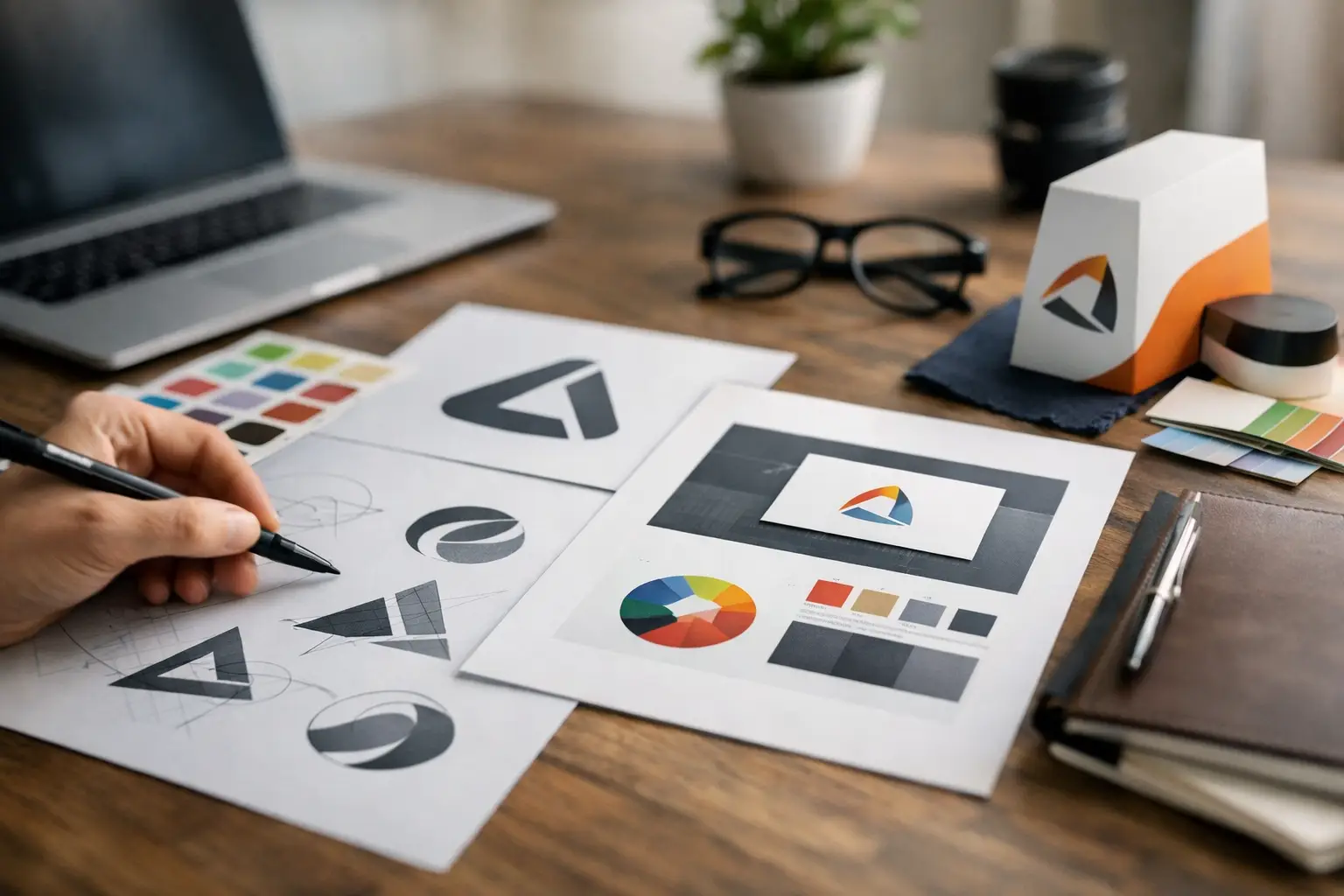
A lot of business owners ask the same question after a website quote or branding proposal lands in their inbox: what is logo and brand identity, and do I really need both? It is a fair question, because these terms are often thrown around as if they mean the same thing. They do not. If you are trying to build a business that looks credible, feels consistent and turns more visitors into enquiries, the difference matters.
The short version is simple. A logo is one part of your brand identity. Your brand identity is the wider visual system people recognise and remember. Your brand itself goes even further – it is the overall impression your business leaves behind.
What is logo and brand identity in simple terms?
Think of your logo as your business signature. It is the mark, symbol or wordmark people see on your website, social profiles, proposals, signage and packaging. It helps people identify you quickly.
Your brand identity is the full visual language around that logo. That includes your colours, typography, image style, graphic elements, layout choices, icon style and the general look and feel of your business. If the logo is one piece of the puzzle, brand identity is the whole picture.
That distinction matters because a logo on its own cannot carry everything. A smart-looking logo will not fix a confusing website, inconsistent social posts or a business that looks different every time it appears online. On the other hand, a clear brand identity helps every touchpoint feel joined up.
A logo is not your whole brand
This is where many businesses get stuck. They pay for a logo, then assume the branding job is done. A few months later, their website uses one shade of blue, their Facebook graphics use another, their brochure uses three random fonts, and nothing feels connected.
That is not a logo problem. It is a brand identity problem.
Your brand is the bigger picture: how people perceive your business, how professional you appear, whether you feel trustworthy, and whether customers remember you when they are ready to buy. Visual identity supports that. Messaging, service quality and customer experience shape it too.
So when someone asks, what is logo and brand identity, the clearest answer is this: your logo helps people spot you, while your brand identity helps people recognise and trust you.
Why the difference matters for small and mid-sized businesses
If you are a growing business, branding can sound like something only large companies worry about. In reality, smaller businesses often need it more because they have less room for confusion.
When your branding is inconsistent, people notice – even if they cannot explain why. Your business can appear less established, less organised or less trustworthy. That affects enquiries, conversions and referrals.
A strong brand identity helps you look more professional without sounding corporate. It gives your business a clear presence across your website, social media, ads, printed materials and sales documents. It also saves time because you are not reinventing the look of your business every week.
There is also a practical side. If you work with designers, developers or marketing support, a clear identity makes execution faster and cleaner. Everyone knows what the brand should look like, which means fewer mixed messages and fewer expensive do-overs.
What a logo actually does well
A logo has an important job, but it is a specific one. It identifies your business quickly and gives people a visual anchor. The best logos are usually simple, clear and flexible enough to work across different formats.
That last point matters more than many people realise. A logo has to work on a mobile screen, a website header, a van, a social profile image and an invoice. If it only looks good in one setting, it is not doing the job properly.
A good logo should feel appropriate for your business, not just fashionable. A law firm, a fitness coach and a local café need different visual signals. Trends can be useful, but chasing them too hard can date your business quickly.
What brand identity includes beyond the logo
Brand identity is where consistency starts to pay off. It gives structure to how your business appears in the real world and online.
That usually includes your primary and secondary colours, chosen fonts, spacing rules, photography style, iconography, graphic patterns and guidelines for how the logo should be used. It may also include tone of voice, though that often sits alongside visual branding rather than inside it.
The point is not to make your business look fancy for the sake of it. The point is to make it recognisable and dependable. When someone lands on your website after seeing your advert or social post, the experience should feel connected. That consistency builds confidence.
It also helps you stand out in a crowded market. Not by shouting louder, but by being easier to recognise.
What is logo and brand identity doing for your marketing?
Branding is often treated as a design exercise, but it has a direct effect on marketing performance. If your business looks inconsistent, your marketing works harder for weaker results.
People make quick decisions online. Within seconds, they are judging whether your business feels credible, current and worth their time. A clear identity supports that first impression. It can make your ads feel more polished, your website feel more trustworthy and your content more memorable.
That does not mean branding alone creates leads. It will not replace strong SEO, useful content, a solid website or a good offer. But it does strengthen all of them. In practice, the businesses that grow well tend to have both: a clear message and a clear visual identity.
When a logo-only approach can be enough
There are cases where starting with a logo makes sense. If you are a very early-stage business with limited budget, getting a solid logo and a basic visual direction can be the right first step. Not every business needs a full brand system on day one.
But it helps to be honest about the trade-off. A logo-only approach is cheaper upfront, yet it often leads to inconsistency later. You may end up patching things together as your business grows, which can cost more in the long run.
If you are already investing in a website, sales materials or digital marketing, it usually makes sense to think beyond the logo. That does not mean overcomplicating it. It means putting enough structure in place so your business looks joined up from the start.
Signs your business needs a stronger brand identity
You probably need more than just a logo if your website and social media do not look like the same business, your marketing materials vary wildly in style, or your team keeps guessing which fonts and colours to use.
Another sign is when your business feels less established than it really is. You may offer a great service, get good results and care about customers, but your presentation does not reflect that. A stronger identity can close that gap.
This is often where businesses decide to refresh their branding. Not because they want a cosmetic change, but because they want their online presence to match the quality of the business behind it.
How to get it right without overcomplicating it
Start with clarity, not decoration. Your branding should reflect who you are, who you serve and how you want to be perceived. If you try to look like everything to everyone, you usually end up looking generic.
A practical approach is to define the basics first: your audience, your positioning, the personality of the brand and the visual style that fits it. From there, create a logo that works well in real situations, then build the supporting identity around it.
Keep it usable. There is no value in a polished brand identity if nobody on your team knows how to apply it. Simple brand guidelines go a long way. They make day-to-day marketing easier and help you stay consistent as the business grows.
At MAWEBDESIGN, this is often the point we help clients simplify. Not by adding layers of jargon, but by creating a brand presence that looks professional, feels clear and actually supports the rest of their marketing.
The real answer to what is logo and brand identity
A logo is your visual marker. Brand identity is the full system that shapes how your business looks and feels. One helps people identify you. The other helps them remember you, trust you and connect the dots across every touchpoint.
If your goal is steady business growth, it is worth treating branding as more than a nice extra. It is part of how your business communicates before a word is read or a call is booked. Get that right, and everything else has a stronger foundation to build on.
If you are weighing up whether you need a logo, a full brand identity or a refresh of what you already have, the best place to start is not with trends. It is with one honest question: does your current brand reflect the quality of the business you have worked hard to build?